
Understanding the Endocannabinoid System: The CB1 Receptor


In today’s blog, I want to continue building on the fundamentals of the endocannabinoid system (ECS). We’ll start by focusing on one of its most important components: the cannabinoid 1 (CB1) receptor. Next week, I’ll cover the CB2 receptor.
The CB1 receptor belongs to a large family of proteins known as G-protein coupled receptors (GPCRs). GPCRs are found throughout the human body and play a major role in how our cells respond to signals. In fact, GPCRs are involved in countless processes, from regulating mood and heart rate to sensing light and smell.
🔬 Where are CB1 receptors found?CB1 receptors are especially abundant in the central nervous system (CNS)—the brain and spinal cord. They are widely distributed in areas of the brain that control:
Perception and sensory processing
Motor control and coordination
Cognition and memory
Emotional regulation and reward pathways
Appetite and energy balance
Cardiovascular and reproductive functions
⚡ What do they do? The main role of the CB1 receptor is to fine-tune and regulate communication between neurons. By doing this, CB1 receptors help maintain balance (also called homeostasis) in the body.
🌿 How do cannabinoids interact?
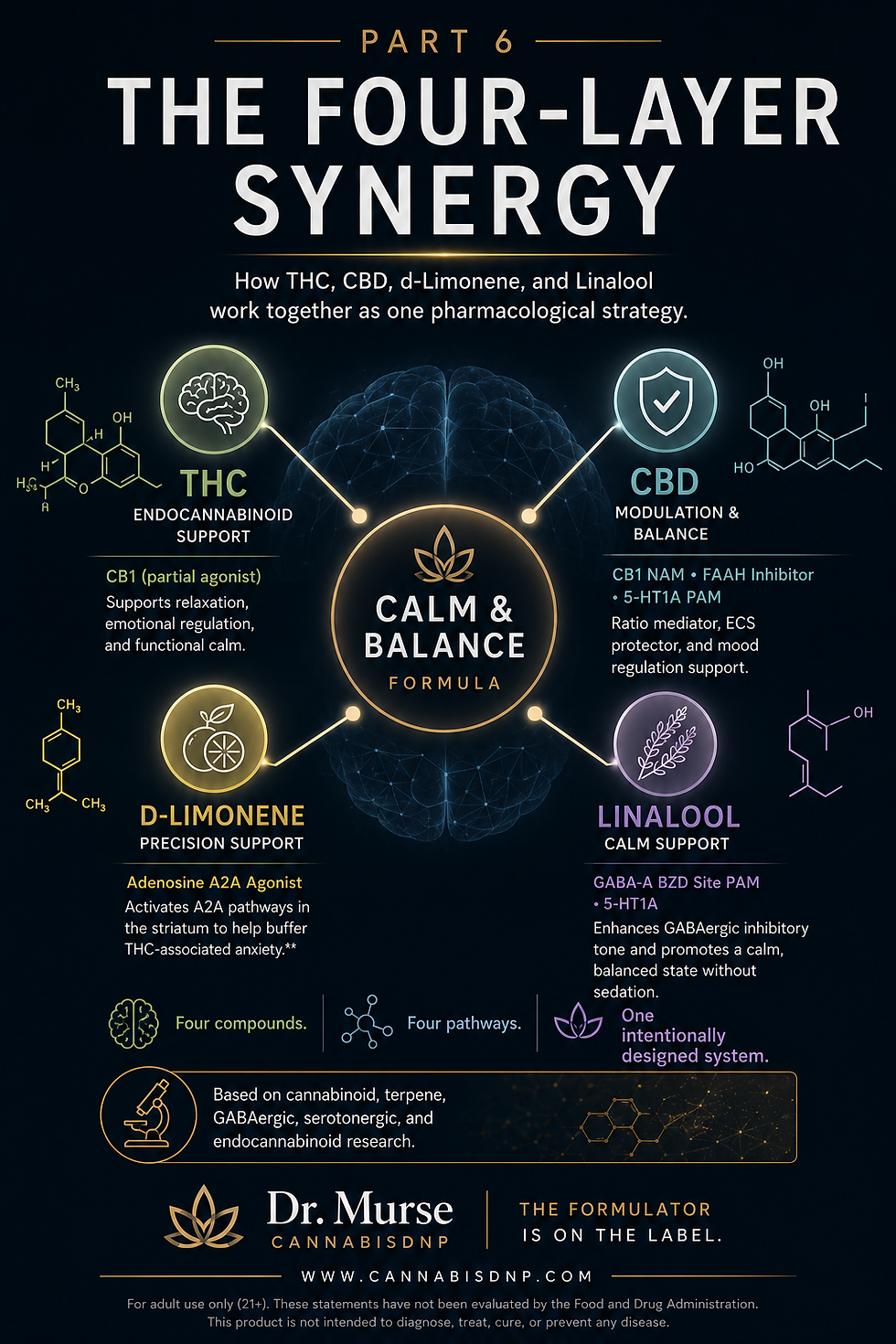
Phytocannabinoids (plant-derived compounds like THC and CBD) can bind to CB1 receptors.
When activated, these receptors can influence pain modulation, mood, learning and memory, motivation, and sensory perception.
Endocannabinoids—the body’s own cannabinoids, like anandamide—naturally activate these receptors as part of everyday functioning.
In short, CB1 receptors act like “volume controls” for many signals in the brain, helping to keep processes from becoming too overactive or underactive.
Next week, we’ll move on to the CB2 receptor, which plays a very different but equally important role in the immune system.
Stay tuned!


Comments