CB2 Receptor: The Quiet Hero of the Endocannabinoid System
- Jesse Christianson
- Sep 9, 2025
- 3 min read

Updated: Mar 7

Written by Jesse Cole Christianson, DNP, APRN, AGPCNP-BC Cannabinoid Science Educator | Founder, Dr. Murse/CannabisDNP
When people think about cannabis, they often think about the "high" linked to THC. That effect mostly comes from the CB1 receptor in the brain. But there's another important receptor in the endocannabinoid system that doesn't get nearly as much attention: the CB2 receptor.
What Is the CB2 Receptor?
The CB2 receptor is like a tiny lock on the surface of cells — found primarily in immune tissues and peripheral nerves. When certain compounds interact with this receptor, they can influence signaling pathways involved in the body's normal inflammatory and immune responses.
Unlike CB1 receptors, CB2 receptors are not concentrated in the brain, which means interacting with them does not produce psychoactive/intoxicating effects. This makes CB2 a particularly interesting subject of scientific research.
How Do Cannabinoids Interact With CB2?
Different compounds found in the hemp plant interact with CB2 receptors in distinct ways:
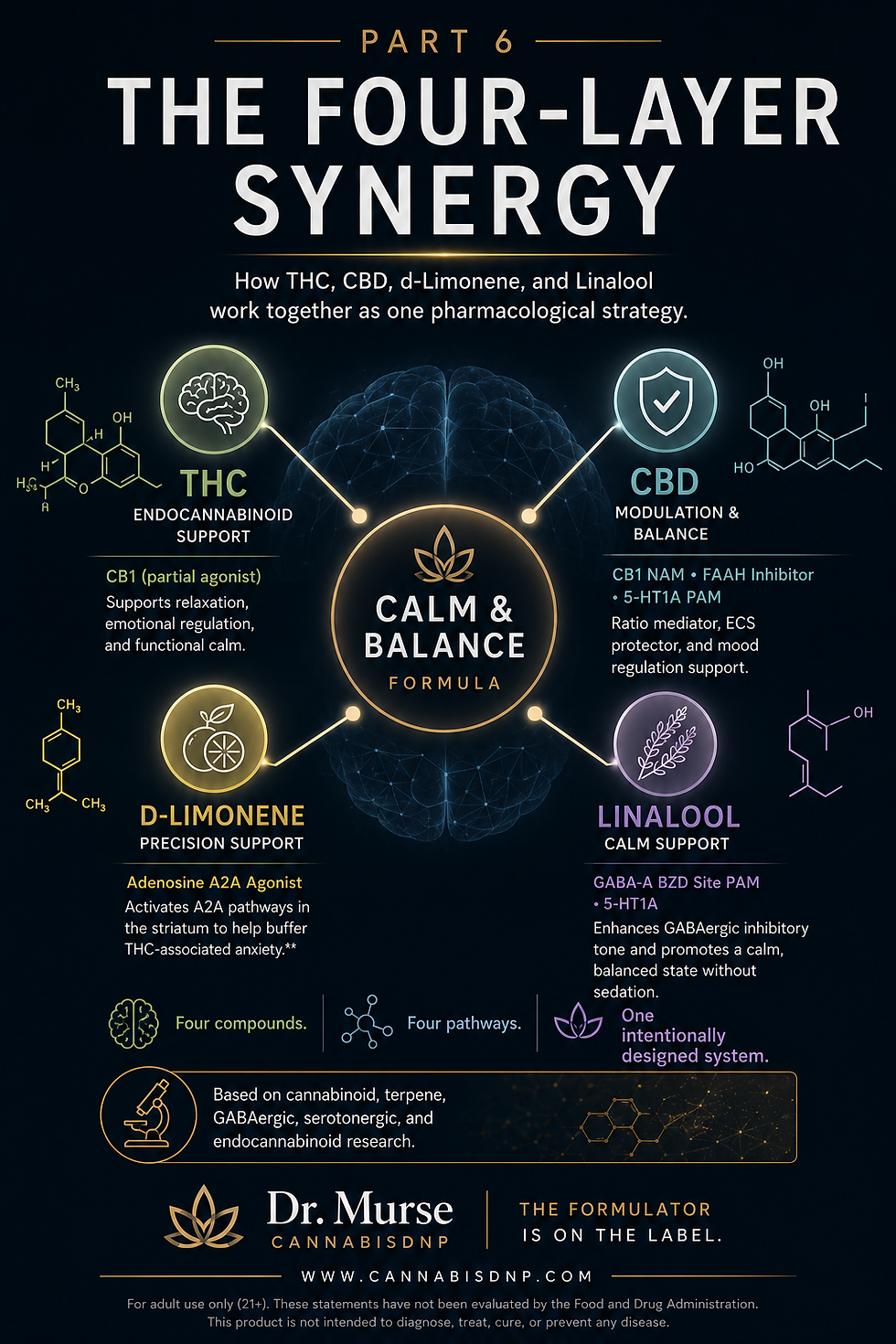
THC (Delta-9 Tetrahydrocannabinol) - While THC primarily interacts with CB1 receptors, it also has affinity for CB2 receptors. Researchers are studying whether this interaction plays a role in the body's normal inflammatory signaling processes.
CBD (Cannabidiol) - CBD does not directly bind CB2 in the same way THC does. Instead, it functions as a negative allosteric modulator — meaning it may influence how receptors respond to other compounds, and may also affect the body's own endocannabinoid levels indirectly.
CBG (Cannabigerol) - CBG has demonstrated direct affinity for CB2 receptors in preclinical research and is one of the most actively studied cannabinoids for its potential relationship with the body's normal immune and inflammatory response pathways.
Beta-Caryophyllene (a terpene) - This is where it gets particularly interesting. Beta-caryophyllene — found in black pepper, cloves, and hemp — is the only known terpene that directly binds CB2 receptors. This makes it a subject of growing interest in cannabinoid and terpene research, and one reason why terpene selection matters in thoughtful formulations.
Why Does CB2 Research Matter?
Because CB2 receptors are closely associated with the body's immune system and inflammatory signaling, researchers are actively studying their potential role in supporting the body's normal physiological balance. Unlike CB1-focused research — which often involves psychoactive effects — CB2 research explores pathways that do not involve intoxication, making it a compelling area of study.
It is important to note that this research is ongoing and evolving. Most mechanistic studies are preclinical. Human clinical trials in this area are growing but not yet definitive across all areas of investigation.
The Bottom Line
The CB2 receptor is one of the most scientifically interesting components of the endocannabinoid system — and one of the least discussed in mainstream wellness conversations. Understanding how cannabinoids like CBD, CBG, and THC interact with CB2, alongside terpenes like beta-caryophyllene, gives us a more complete picture of how the endocannabinoid system functions.
This is exactly the kind of evidence-informed education that drives every formulation decision at Dr. Murse/CannabisDNP. Our wellness blends are developed with intentional cannabinoid and terpene pairings — not random ingredient lists.
🌿 Learn more about our formulations at cannabisdnp.com
What's Coming Up Next
Next week: A deeper look at endocannabinoids — the cannabis-like compounds your own body produces naturally. These internal messengers play a significant role in maintaining physiological balance across multiple body systems, yet they rarely get the attention they deserve. We'll explore what they are, how they function, and why they matter.
The week after: We'll examine the emerging concept of endocannabinoid deficiency — what the research suggests about reduced endocannabinoid activity, and what that could mean for our understanding of human physiology. This is where cannabinoid science and broader health research start to converge in genuinely fascinating ways.
Stay curious. The science is just getting started.
These statements have not been evaluated by the Food and Drug Administration. Dr. Murse/CannabisDNP products are not intended to diagnose, treat, cure, or prevent any disease. The information in this post is intended for educational purposes only and does not constitute medical advice. Always consult your personal healthcare provider before use.


Comments