
Clinical Cannabinoids: A Smarter Approach to Plant-Based Wellness

Cannabinoids have stepped into the spotlight in plant-based wellness — and for good reason. These compounds, found in the cannabis plant, interact with one of the body’s most important regulatory networks: the endocannabinoid system (ECS).
But here’s what most people miss:
Not all cannabinoid products are created equally.
The difference isn’t hype.It’s formulation.
At Dr. Murse / CannabisDNP, we focus on what we call clinical cannabinoid formulations — precision-designed blends developed with intention, consistency, and physiological understanding.
What Makes a Formulation “Clinical”?
When we say clinical cannabinoid formulation, we’re not talking about stronger products.
We’re talking about:
• Purpose-driven cannabinoid ratios• Measured, consistent dosing• Transparent sourcing• Third-party lab verification• Science-informed design
The cannabis plant contains more than 100 cannabinoids along with dozens of terpenes and flavonoids. Each interacts differently with the nervous system.
Clinical formulation takes that complexity and applies strategy.
For example:
A blend designed for evening use may emphasize low-dose THC with supportive and calming terpenes.
A daytime formulation may balance low-dose THC with CBD to support clarity and steady mood without overwhelming intoxicating intensity.
This is about modulation — not maximization.
Why Ratios Matter More Than Milligrams
In today’s market, many products compete on potency alone.
But physiology doesn’t respond to milligrams in isolation.
Cannabinoids interact with:
ECS receptors
Serotonin pathways
TRPV channels
Inflammatory signaling cascades
And on and on and on
Balanced ratios can influence how the body responds — often allowing for lower doses with more predictable effects.
We’re not competing in the “strongest edible” race. We’re building measured, intelligent cannabinoid tools.
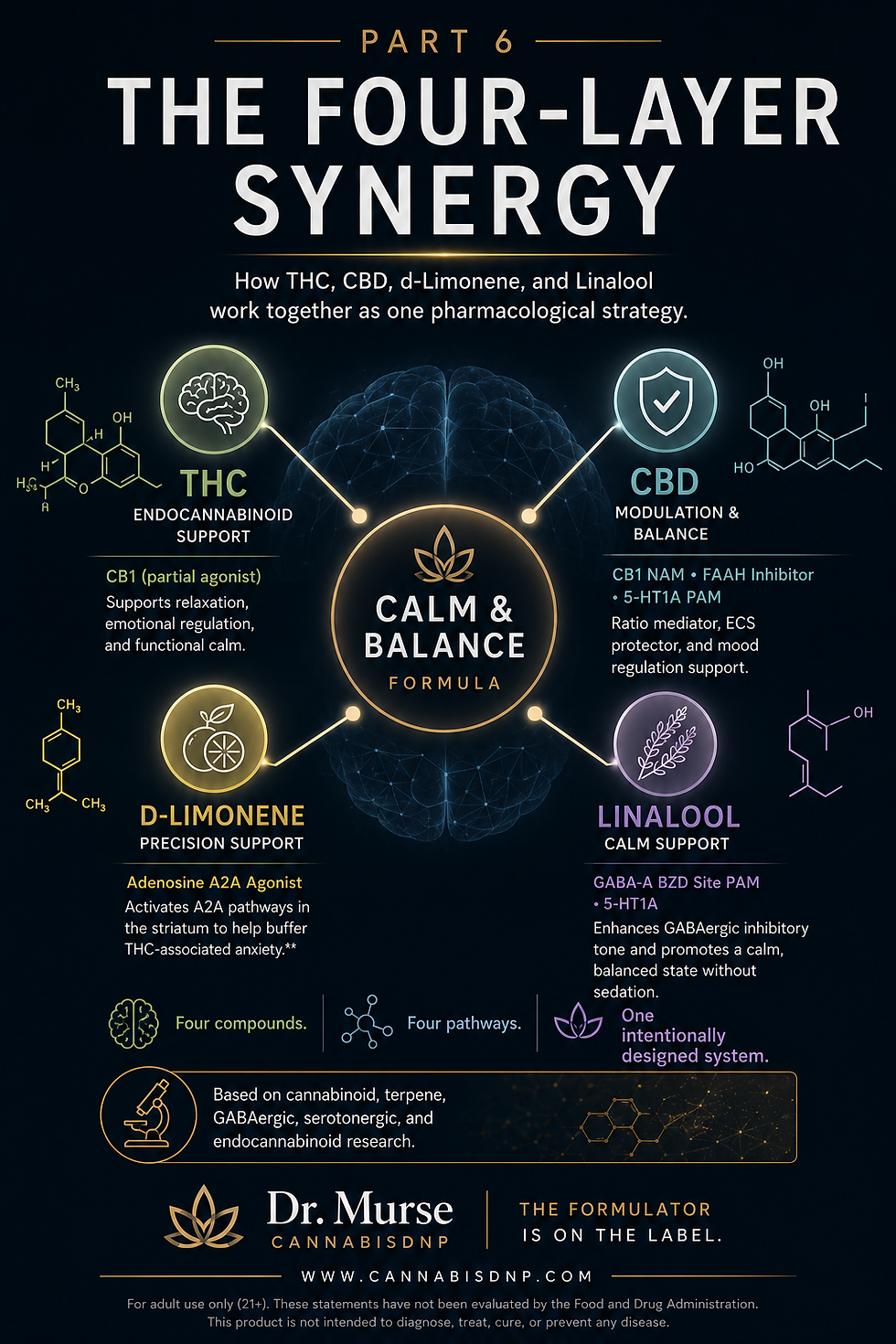
The Role of Terpenes: The Overlooked Modulators
Terpenes aren’t just about aroma.
Compounds such as:
Beta-Myrcene
Linalool
Alpha-Pinene
D-Limonene
may influence how cannabinoids are perceived by the nervous system.
This synergy — sometimes referred to as the “entourage effect” or more directly as the synergistic effect — is one reason full-spectrum, thoughtfully structured formulations can feel different from isolated compounds.
Again, it comes down to design.
How to Evaluate a True Clinical Cannabinoid Product
If you’re exploring cannabinoid wellness, here’s what to look for:
✔ Clear cannabinoid ratios✔ Consistent per-serving dosing✔ Third-party lab results✔ Transparent ingredient sourcing✔ A brand that prioritizes education over exaggeration
At Dr. Murse / CannabisDNP, our formulations are developed by a board-certified nurse practitioner with years of bedside and primary care experience.
Education is not a marketing angle for us. It’s the foundation.
Incorporating Clinical Cannabinoids Into Your Routine
If you’re new to cannabinoids, consider these guidelines:
• Start low and titrate gradually• Choose a format that fits your lifestyle (taffies, tinctures, capsules, etc.)• Be consistent — sporadic use produces inconsistent experiences• Track how timing and dosage influence your response
Cannabinoid wellness works best when it’s intentional.
Our Philosophy: Regulate, Don’t Overwhelm
We do not claim to diagnose, treat, cure, or prevent disease.
What we do believe is this:
The endocannabinoid system plays a role in maintaining physiological balance — and thoughtfully designed formulations can support that balance as part of a broader wellness strategy.
That’s what sets Dr. Murse apart.
Not louder.Not stronger.More precise.
Clinical Cannabinoids Are the Future of Responsible Cannabis
The cannabis industry is evolving.
The next phase isn’t about novelty. It’s about literacy.Consistency.Professional oversight.And smarter formulation science.
If you’re looking for plant-based support grounded in physiology — not hype — we invite you to explore our clinical cannabinoid line.
Because balance isn’t accidental. It’s formulated.
—Jesse Christianson, DNP, AGPCNP-BCDr. Murse / CannabisDNP


Comments