

THREE FORMULATIONS. THREE DISTINCT PROFILES.
FIND YOUR FORMULATION
Different cannabinoid ratios. Different terpene profiles.
Each formulated with intention.
HEMP + RESPONSIBLE USE INFORMATION
HEMP-DERIVED • ADULT USE 21+ • KEEP OUT OF REACH OF CHILDREN
RESPONSIBLE USE
Our hemp-derived products contain no more than 0.3% Δ9-THC by dry weight in accordance with the federal hemp definition currently in effect. Intended for adult use only (21+). Keep out of reach of children. Products containing Δ9-THC may cause impairment. Do not drive or operate machinery after use. Consult your healthcare provider before use, particularly if pregnant, nursing, taking prescription medications, or managing a medical condition.
IMPORTANT INFORMATION
These statements have not been evaluated by the Food and Drug Administration. These products are not intended to diagnose, treat, cure, or prevent any disease. Information provided by Dr. Murse/CannabisDNP is for educational purposes only and is not a substitute for individualized medical advice from a licensed healthcare professional.

What's Inside
EVERY INGREDIENT EARNS ITS PLACE.
Dr. Murse formulations combine intentionally selected hemp-derived cannabinoids and naturally occurring terpenes. Each is considered through the weight of available evidence, pharmacology, formulation goals, and an ongoing review of the science.
NOT EVERY INTERESTING MOLECULE BELONGS IN EVERY FORMULATION.
Cannabinoids
A chemistry note: CBGA—not CBG—is the biosynthetic precursor from which major cannabinoid acids including THCA and CBDA are formed. CBG is produced when CBGA decarboxylates.
CBD
Cannabidiol
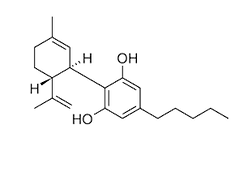
A non-intoxicating phytocannabinoid with complex pharmacology extending well beyond CB1 and CB2. CBD interacts with multiple signaling systems, including serotonin and transient receptor potential (TRP) channels, while also influencing endocannabinoid signaling. Its effects are dose-, route-, and formulation-dependent, and the clinical evidence varies considerably by outcome.
Δ9-THC
Delta-9-Tetrahydrocannabinol

The primary intoxicating phytocannabinoid in cannabis. Δ9-THC acts primarily as a partial agonist at CB1 and CB2 cannabinoid receptors, with CB1 activity contributing substantially to its psychoactive effects. Response varies with dose, route, tolerance, individual physiology, and formulation.
CBG
Cannabigerol
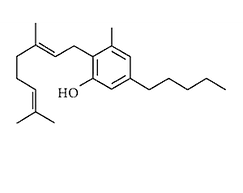
A non-intoxicating phytocannabinoid with a distinct and still-emerging pharmacologic profile. Reported targets include α2-adrenergic, 5-HT1A, cannabinoid, and TRP receptors and channels. Much of this mechanistic evidence remains preclinical, and considerably more human research is needed.
β-CARYOPHYLLENE

Peppery • Woody • Spicy
TARGETS: CB2 • PPARα/γ
β-Caryophyllene is unusual among common cannabis terpenes because it is a well-characterized selective CB2 receptor agonist without CB1-mediated intoxication. Preclinical research links CB2 and related signaling to inflammatory and nociceptive pathways, making β-caryophyllene particularly interesting in research involving inflammation and discomfort. PubMed
Linalool

Floral • Lavender • Soft
TARGETS/PATHWAYS: GABAergic • Glutamatergic • Adenosine signaling
Linalool is widely studied for effects involving neuronal excitability and inhibitory signaling. Preclinical research has reported anxiolytic-, sedative-, and antinociceptive-like effects, while human evidence involving linalool-containing preparations also makes it an interesting compound in relaxation and stress-response research. The exact mechanisms remain more complex than a single receptor explanation.
β-MYRCENE

Earthy • Herbal • Musky
TARGETS/PATHWAYS: TRPV1 • α2-Adrenergic • inflammatory signaling
β-Myrcene is one of the more abundant terpenes found in many cannabis chemovars. Preclinical studies have investigated analgesic-, anti-inflammatory-, and sedative-like effects, with reported activity involving TRPV1, α2-adrenergic signaling, and inflammatory pathways. Human evidence remains limited, so claims that “myrcene makes you sleepy” go beyond what the clinical literature can presently establish.
D-Limonene

Citrus • Bright • Fresh
TARGETS/PATHWAYS: Serotonergic • Adenosine • TRP signaling
D-Limonene is being studied across serotonergic, adenosine, TRP, and inflammatory signaling pathways. Preclinical findings include anxiolytic-, antidepressant-, and anti-inflammatory-like effects, while limited human research makes mood and stress-response outcomes particularly interesting areas for continued investigation. These findings do not establish limonene as a treatment for anxiety or depression.
α-Pinene

Pine • Fresh • Resinous
TARGETS/PATHWAYS: Cholinergic • inflammatory signaling
α-Pinene is being investigated for effects involving acetylcholine signaling, neuroinflammatory pathways, and cognition. Preclinical work has generated interest in memory, attention, and inflammatory outcomes, but direct human evidence remains limited. Its pharmacology is more nuanced than the common claim that α-pinene simply “improves focus.”
terpinolene

Fresh • Herbal • Lightly Floral
TARGETS/PATHWAYS: GABAergic • serotonergic • oxidative/inflammatory pathways
Terpinolene is one of the less extensively characterized terpenes in the Dr. Murse formulations. Preclinical research has explored sedative-, antioxidant-, and anti-inflammatory-like activity, but its receptor pharmacology and human clinical evidence are far less developed than those of compounds such as β-caryophyllene. That uncertainty is part of the science—not something to hide.
Recent reviews discuss possible GABAergic, serotonergic, olfactory, and other mechanisms, but the evidence is heterogeneous.
TERPENES
Terpenes are aromatic compounds with pharmacology of their own. Receptor and pathway research helps explain why they are scientifically interesting—but mechanistic and preclinical findings should not be mistaken for proven clinical outcomes.
Reported molecular targets and outcomes vary by experimental model, concentration, route of administration, and study design. Much of the terpene literature remains preclinical.
THE MOLECULE IS INTERESTING.
THE QUALITY OF THE EVIDENCE MATTERS MORE.
Dr. Murse formulations are informed by the totality of available evidence—not a single study, mechanism, marketing claim, or trendy ingredient.
THE DETAILS MATTER.
QUALITY ISN'T A FINISHING STEP. IT'S BUILT INTO THE PROCESS.
From ingredient sourcing through finished-product testing, Dr. Murse works with manufacturing and laboratory partners selected around defined quality standards, documented processes, and independent verification.
SOURCED WITH INTENTION
FARM-TO-FORMULATION TRACEABILITY
Our hemp is cultivated on USDA-compliant farms in Wisconsin and across the Midwest, operating within applicable state hemp programs and selected with attention to quality, consistency, and responsible cultivation practices.
Dr. Murse maintains chain-of-custody documentation tracing our cannabinoid ingredients back to their farm source, providing visibility beyond the finished product. Cultivation, processing, ingredient identity, potency, and laboratory testing are documented throughout the supply chain.
KNOWING WHAT IS IN A FORMULATION STARTS WITH KNOWING WHERE IT CAME FROM.
MADE WITH
CONTROL
DOCUMENTED MANUFACTURING
Dr. Murse formulations are produced with manufacturing partners using defined production processes designed to support consistency and quality from batch to batch.
Cannabinoid inputs are incorporated into measured formulations, while finished taffies are individually wrapped and packaged to help protect product integrity throughout storage and handling.
CONSISTENCY DOESN'T HAPPEN BY ACCIDENT.
VERIFIED BY
TESTING
INDEPENDENT LABORATORY ANALYSIS
Finished Dr. Murse formulations undergo independent laboratory analysis to verify cannabinoid potency and screen for quality-related contaminants.
Current finished-product testing is performed by an ISO/IEC 17025-accredited laboratory, providing batch-specific laboratory results rather than relying solely on ingredient-level testing or supplier documentation.
VERIFY THE PRODUCT. DON'T JUST TRUST THE PACKAGE.
DON'T TAKE OUR WORD FOR IT.
SEE THE RESULTS.
Every current Dr. Murse formulation has batch-specific laboratory documentation available for review.
POTENCY
Cannabinoid concentrations verified
PURITY
Screened for quality-related contaminants
TRACEABILITY
Batch-specific laboratory reports
Meet Dr. Murse.
Jesse Cole Christianson, DNP, AGPCNP-BC
Dr. Murse wasn't created to put another edible on the shelf. It grew from years of nursing practice, doctoral education, cannabinoid pharmacology, and a simple question: Can these products be formulated more intentionally?
Jesse Christianson, DNP, AGPCNP-BC, is a board-certified Adult-Gerontology Primary Care Nurse Practitioner and the founder and formulator behind Dr. Murse. His doctoral work at the University of Wisconsin–Madison, “Cannabis: Building Practice Competencies and Political Will for Safe and Therapeutic Use in Wisconsin,” focused on cannabinoid education, clinical competency, and responsible use.
That education continues through cannabinoid-focused continuing education, professional involvement, teaching, and an ongoing review of emerging research.

MEET THE FORMULATOR
Doctor of Nursing Practice • Board-Certified Nurse Practitioner
THE FORMULATOR IS ON THE LABEL.
Every ingredient should have a reason for being there—and the evidence should be strong enough to explain why.
DOCTOR-FORMULATED • NURSE PRACTITIONER-OWNED
PROFESSIONAL INVOLVEMENT
ENGAGED IN THE FIELD.
ENGAGED IN THE FIELD.
Ongoing professional involvement keeps Dr. Murse connected to cannabinoid medicine, clinical education, patient advocacy, and the evolving science surrounding cannabis and cannabinoids.
.png)


SOCIETY OF CANNABIS CLINICIANS
MEMBER SINCE 2023
AMERICANS FOR SAFE ACCESS
MEMBER SINCE 2024
ASSOCIATION OF CANNABINOID SPECIALISTS
MEMBER SINCE 2023
Professional memberships reflect individual participation and do not imply organizational endorsement of Dr. Murse products.
MOLLY K. • WISCONSIN
"I took a half of a calm blend taffy and felt great all day yesterday! Gave my husband a chew lastnight because of increased stress, and he felt very calm throughout the evening."
Minh N. • WISCONSIN
"The taffies are excellent!! I haven't taken more than half at a time, effects were perfect I thought."
James b. • WISCONSIN
"I've experienced a notable improvement in my sleep since using the Rest & Recovery taffy!"